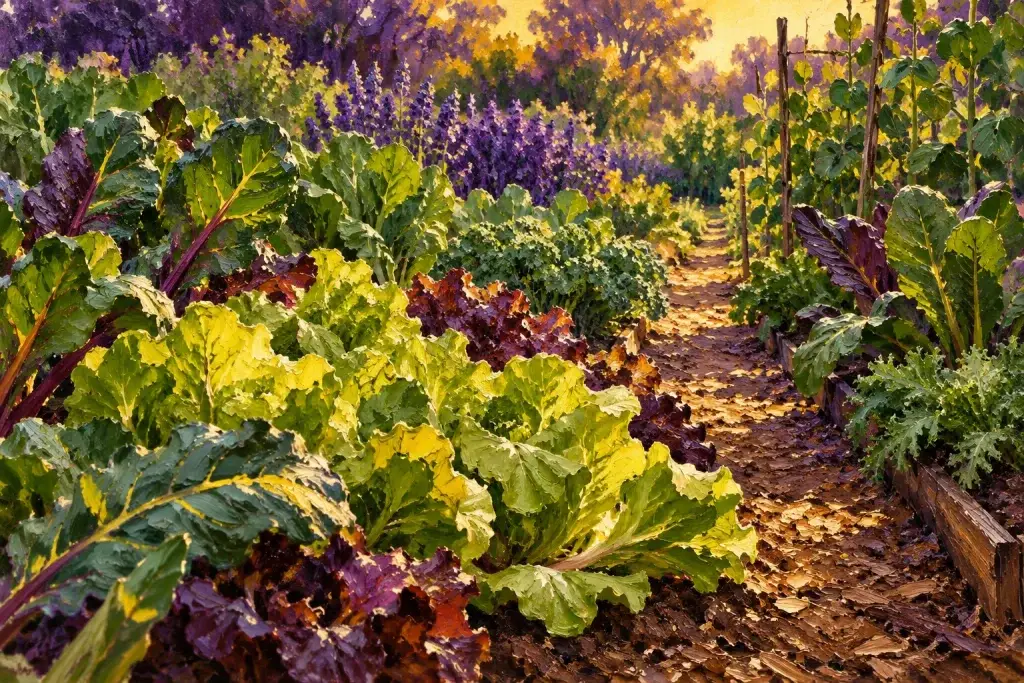
I toured a garden at Raven Rocks that completely shifted how I think about food, space, and what is possible in a backyard.
This was an intentionally designed food system. The garden drew on methods from a time when families depended on the food they could grow at home. What caught my attention was how much each part of the garden contributed to the whole.
Build live soil
What stood out first was how alive the soil looked. Compost, deep soil preparation, and careful planting all help build the conditions that plants need. The garden made that work visible.
The method behind it is GROW BIOINTENSIVE, developed through the work of Ecology Action and John Jeavons. His book, How to Grow More Vegetables, is a place to start if you want to study the approach in depth.
Ecology Action describes eight practices that work together: deep soil preparation, compost, close plant spacing, companion planting, crops that supply compost material, calorie crops, open-pollinated seeds, and a whole-system approach. Close spacing is one part of that system, rather than a reason to crowd plants into an unprepared bed.
Use your growing space with intention
The spacing was much tighter than most people are used to seeing. Leaves grew close enough to shade the soil, creating a living cover. Paths were narrow, and very little space went unused. Most of what I could see was either growing food or supporting something that was.
That does not mean every crop needs the same spacing. It means planning the bed around the plants, the soil, and the space you have. A small garden can do a great deal when those pieces work together.
Let some plants complete their life cycle
One lettuce bed had gone to seed and was reseeding itself. That stayed with me. We often think of a vegetable garden as something we must continually restart, but this bed showed another part of the cycle: a plant growing, producing seed, and making room for the next generation.
Turn a garden visit into a homeschool lesson
A garden like this offers so many ways to learn. Study biology through soil life, use math to compare spacing, follow a plant from leaf to seed, and ask how compost returns nutrients to the garden. Children can observe a working system and ask their own questions about it.
For another example of learning outside, see our blueberry-picking homeschool field trip. You can also learn about the role of community in education in my Greenbriar Community School interview.
The biggest lesson from this visit was simple: use the land you have with intention. Build the soil, pay attention to the plants, and think about how each part supports the rest.